Choosing the right linear light for your space doesn’t have to be complicated. The “best” linear light isn’t a one-size-fits-all product; it’s the one that perfectly meets the specific needs of your room, its function, and your aesthetic preferences. This guide will walk you through the key considerations, making the selection process straightforward and helping you achieve optimal lighting.
Understanding Your Space and Needs
Before diving into product specifications, take a moment to really think about the area you’re lighting. This foundational step will inform every subsequent decision.
The Room’s Purpose
What happens in this space? Is it a bustling office where focus is key, a retail store needing to highlight products, a cozy living room, a garage workshop, or a sterile hospital corridor? Each activity demands different light levels, color temperatures, and beam distributions. For instance, a workshop needs bright, clear light to prevent accidents, while a restaurant might prioritize warm, inviting ambient lighting.
Existing Light Sources
Consider what other light sources are present. Do you have natural light pouring in from windows? Are there recessed lights, task lamps, or accent lighting already in place? Linear lighting can complement or become the primary source, but understanding the existing lighting landscape helps you avoid over-lighting or creating awkward shadows.
Ceiling Height and Type
The height of your ceiling plays a crucial role in determining the ideal lumen output and mounting style. A high ceiling in a warehouse will need much brighter fixtures than a low office ceiling. Also, consider the ceiling type: suspended grid, drywall, or open structure. This will dictate whether surface-mounted, recessed, or suspended linear lights are most appropriate.
Aesthetic Goals
Beyond functionality, how do you want the space to feel? Do you want a modern, minimalist look with sleek lines, or something more industrial? Linear lights come in a vast array of designs, finishes, and profiles, allowing them to integrate seamlessly or act as a striking architectural feature.
Key Technical Specifications to Consider
Once you have a clear picture of your space, it’s time to delve into the technical aspects of linear lighting. These terms might seem daunting at first, but understanding them is crucial for making an informed choice.
Lumen Output (Brightness)
Lumens measure the total amount of visible light emitted by a light source. Don’t confuse lumens with watts; watts measure energy consumption, while lumens measure brightness. The appropriate lumen output depends heavily on the room’s size, ceiling height, and purpose. As a general guideline:
- Task Lighting (e.g., office desk, workshop): Higher lumens per square foot are needed.
- Ambient Lighting (e.g., hallway, general retail): Moderate lumens.
- Accent Lighting: Lower lumens, often used to highlight features.
You can find online calculators or consult lighting designers to help determine the exact lumen requirements for your specific space. Over-lighting can lead to glare and discomfort, while under-lighting makes a space feel dim and unproductive.
Color Temperature (CCT)
Color Correlated Temperature (CCT), measured in Kelvin (K), describes the “warmth” or “coolness” of the light.
- Warm White (2700K – 3000K): Similar to incandescent bulbs, creates a cozy, inviting atmosphere. Ideal for living rooms, restaurants, and bedrooms.
- Neutral White (3500K – 4000K): A balanced light, often preferred for offices, classrooms, and retail spaces where accurate color rendering is important without being overly sterile.
- Cool White/Daylight (5000K – 6500K): Brighter, more invigorating light, mimicking natural daylight. Best for task-intensive areas like workshops, hospitals, and kitchens where visibility and alertness are crucial.
Choosing the right CCT significantly impacts the mood and functionality of a space.
Color Rendering Index (CRI)
CRI measures how accurately a light source renders colors compared to natural sunlight (which has a CRI of 100). A higher CRI (generally 80+ is good, 90+ is excellent) means colors will appear truer and more vibrant under that light. This is particularly important for:
- Retail spaces: To showcase products accurately.
- Art galleries/museums: To preserve the integrity of artworks.
- Residential spaces: For a more natural and appealing appearance of interiors.
- Workshops/studios: Where color accuracy is essential for tasks.
For general utility areas like corridors or storage rooms, a lower CRI might be acceptable, but for most inhabited spaces, aim for CRI 80 or higher.
Beam Angle and Distribution
Linear lights aren’t just about brightness; how that light is distributed matters. The beam angle refers to the spread of light from the fixture.
- Narrow Beam (e.g., 30-60 degrees): Creates a more focused light, good for accentuating specific areas or providing task lighting.
- Wide Beam (e.g., 90-120 degrees): Provides a broader, more uniform wash of light, ideal for general ambient lighting.
Some linear fixtures offer different lens options or adjustable heads to modify the beam distribution. Consider whether you need direct light downwards, indirect light upwards (to bounce off the ceiling for softer general illumination), or a combination of both (direct/indirect). Uplighting can make a space feel larger and reduce glare, while downlighting provides focused illumination.
Dimming Capabilities
The ability to dim your linear lights offers flexibility and energy savings. There are several dimming protocols:
- 0-10V Dimming: A common, robust analog dimming standard, widely used in commercial applications.
- DALI (Digital Addressable Lighting Interface): A more advanced digital protocol allowing individual control of fixtures, scene setting, and energy monitoring.
- Phase Dimming (Triac/ELV): Often used in residential settings for simpler installations.
Ensure that your chosen linear fixture is compatible with your desired dimming system and that your dimmer switch matches the fixture’s requirements. Dimming can transform a bright workspace into a relaxed setting with the flick of a switch, enhancing versatility.
Mounting Options and Installation
The physical integration of linear lights into your space is just as important as their performance. Different mounting types offer distinct aesthetic and functional advantages.
Recessed Mounting
Recessed linear lights are installed within the ceiling, creating a clean, seamless look where the fixture is flush with the surface.
- Pros: Minimalist aesthetic, excellent for low ceiling heights, provides unobstructed views.
- Cons: Requires a plenum space above the ceiling, more complex installation, difficult to reconfigure.
- Best for: Offices, retail stores, modern homes, and areas where a sleek, integrated look is desired. Ensure you have adequate depth in your ceiling void for the fixture housing.
Surface Mounting
Surface-mounted linear lights are installed directly onto the surface of the ceiling or wall.
- Pros: Easier installation than recessed, no need for plenum space, versatile for various ceiling types, can act as a design element.
- Cons: Less discreet than recessed, can visually lower a ceiling slightly.
- Best for: Spaces without sufficient ceiling depth for recessing, concrete ceilings, garages, workshops, and areas where a more industrial or direct look is acceptable.
Suspended Mounting
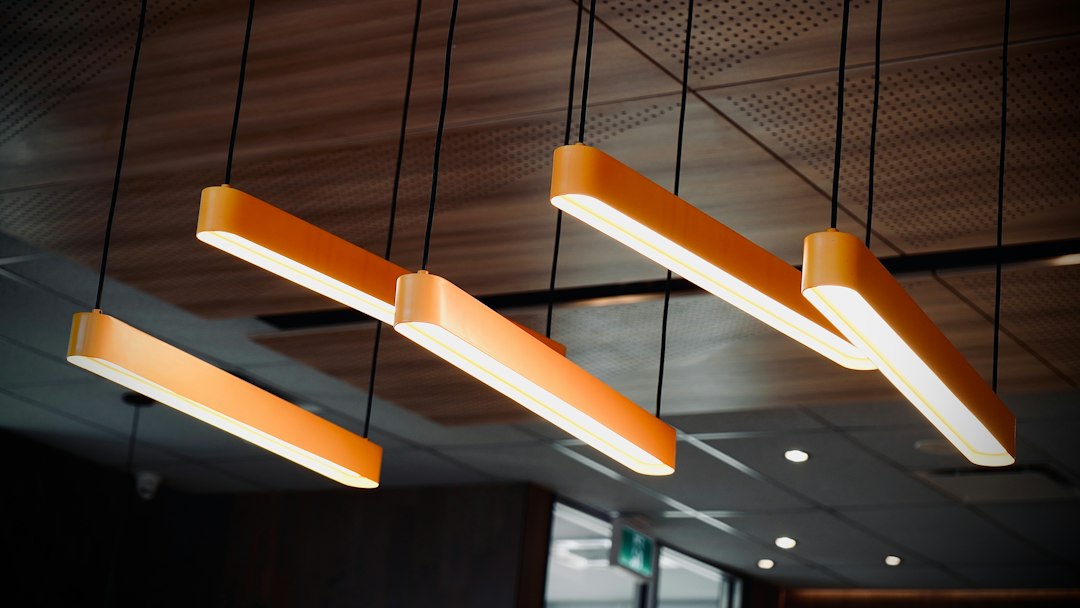
Suspended linear lights hang down from the ceiling by cables or rods.
- Pros: Creates a striking architectural statement, ideal for high ceilings (bringing light closer to the work plane), often offers direct/indirect light distribution, easy maintenance.
- Cons: Can be visually prominent, might not be suitable for very low ceilings where they could obstruct views.
- Best for: High-ceilinged offices, open-plan commercial spaces, retail environments, and industrial settings. They are particularly effective in creating a sense of depth and can improve acoustic comfort in large rooms.
Wall Mounting
While less common as primary general lighting, linear lights can also be wall-mounted for accent lighting, cove lighting, or to create interesting architectural effects.
- Pros: Adds visual interest, can highlight textures, useful for indirect illumination.
- Cons: Limited as a sole source of ambient light.
- Best for: Enhancing specific wall features, creating a wash of light along a corridor, or backlighting architectural elements.
Material, Durability, and Maintenance
Beyond the technical specs and mounting, consider the physical aspects of the fixture itself.
Fixture Material and Finish
The material and finish of the linear light fixture contribute significantly to the overall aesthetic and durability.
- Aluminum: Common, lightweight, good for heat dissipation, available in various anodized or powder-coated finishes (e.g., black, white, silver).
- Steel: More robust, often used in industrial or outdoor applications, typically powder-coated.
- Polycarbonate/Acrylic: Used for diffusers, offering different light diffusion properties (frosted for soft light, clear for focused light).
Choose finishes that complement your existing decor. A sleek black fixture might suit a modern office, while a brushed silver could fit an industrial aesthetic.
IP Rating (Ingress Protection)
The IP rating indicates how well a fixture is protected against solids (dust, debris) and liquids (water). This is critical for certain environments:
- IP20: Standard indoor dry location, protected against solid objects larger than 12.5mm (e.g., fingers).
- IP44: Protected against solid objects larger than 1mm and splashing water from any direction. Suitable for bathrooms and covered outdoor areas.
- IP65/IP66: Dust-tight and protected against powerful water jets. Essential for washdown areas, outdoor exposed locations, or industrial environments with dust or moisture.
- IP67/IP68: Submersible up to a certain depth. Used for fountains, underwater features.
Always check the IP rating if the fixture will be exposed to moisture, dust, or other environmental factors.
Lifetime and Warranty
LED linear lights are known for their long lifespan, often rated for 50,000 to 100,000 hours. However, the quality of components (drivers, LEDs) varies.
- L70/B50: Look for these ratings. L70 means the lumen output has dropped to 70% of its initial value. B50 means 50% of the fixtures are expected to reach that point. A fixture rated L70/B50 at 50,000 hours is a good indicator of longevity.
- Warranty: A reputable manufacturer will offer a substantial warranty (often 3-5 years, sometimes more) on their fixtures, covering defects in material and workmanship. This provides peace of mind and protection for your investment.
Ease of Maintenance
Consider how easy the fixture will be to clean and, if necessary, repair or replace components. While LEDs have long lifespans, drivers can sometimes fail. Modular designs that allow for easy driver replacement can save costs and hassle in the long run.
Energy Efficiency and Smart Features
Modern linear lighting offers more than just illumination; it provides opportunities for significant energy savings and enhanced control.
LED Technology
Always opt for LED linear lights. They are vastly more energy-efficient than traditional fluorescent or incandescent options, offering:
- Lower Energy Consumption: Up to 80% less energy than conventional lighting.
- Longer Lifespan: Reduces maintenance and replacement costs.
- Better Light Quality: Consistent output, instant on, no flicker.
- Environmental Benefits: No mercury, lower carbon footprint.
While the upfront cost of LED fixtures might be higher, the operational savings over their lifetime quickly make them the more economical choice.
Occupancy and Daylight Sensors
Integrating sensors can further optimize energy usage and convenience:
- Occupancy Sensors: Automatically turn lights on when someone enters a space and off (or dim) when no one is present. Ideal for meeting rooms, restrooms, corridors, and storage areas.
- Daylight Harvesting Sensors: Detect ambient natural light levels and automatically dim or brighten fixtures to maintain a consistent light level, reducing reliance on artificial light when natural light is abundant. Perfect for spaces with significant window exposure.
These smart features lead to substantial energy savings and contribute to a building’s overall sustainability efforts.
Smart Lighting Controls and Integration
Beyond basic dimming and sensors, many linear lighting systems can be integrated into broader smart building management systems (BMS) or smart home platforms.
- Wireless Control: Bluetooth Mesh, Zigbee, or Wi-Fi enabled fixtures allow control via apps, voice assistants, or smart switches.
- Scene Setting: Pre-program different lighting scenarios for various activities (e.g., “presentation mode,” “evening ambiance,” “cleaning mode”).
- Color Tuning (Tunable White): Some advanced LED linear lights allow you to adjust the CCT, mimicking natural daylight cycles (circadian lighting) or simply offering greater flexibility for different moods or tasks.
- Human-Centric Lighting (HCL): This concept uses tunable white light to support human well-being, alertness, and sleep cycles by adjusting the color temperature and intensity throughout the day to match natural light patterns. This is gaining traction in offices, healthcare, and educational settings.
Consider the level of control and integration you need now and anticipate needing in the future. Investing in a system that can be expanded or upgraded easily can be a smart long-term decision.
By carefully considering your space’s needs, understanding the technical specifications, evaluating mounting options, prioritizing durability, and embracing energy-efficient and smart features, you’ll be well-equipped to choose the best linear light that not only illuminates your space but enhances its functionality and aesthetic appeal for years to come.